
Key Learnings from the TRANSFORM Webinar: From Concept to Factory – Enabling Smart Manufacturing with the Digital Thread
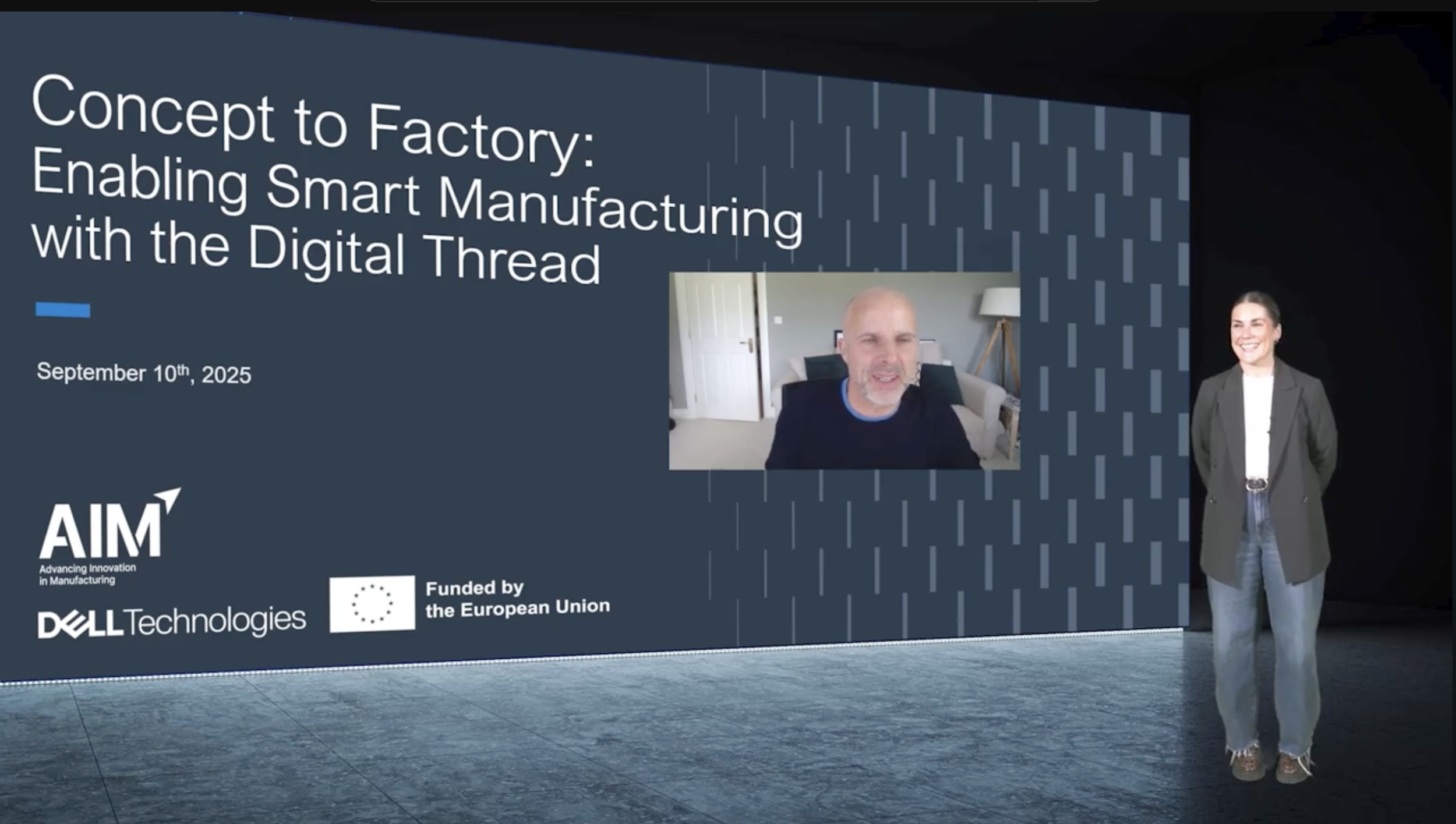
As part of the Erasmus+ TRANSFORM project, AIM Centre recently hosted the second webinar in its expert-led series, From Concept to Factory: Enabling Smart Manufacturing with the Digital Thread, in partnership with Dell Technologies. The session explored how manufacturers can create connected, data-driven operations by implementing a Digital Thread across the entire product lifecycle.
Presented by Laura Hanlon, Solution Architect for Edge Computing at Dell Technologies, and David Bermingham, Director of AI at AIM Centre, the webinar highlighted how organisations can move beyond isolated digital initiatives and create a seamless flow of information from design through to production and continuous improvement.
What is the Digital Thread?
One of the central themes of the webinar was the concept of the Digital Thread – a connected flow of data that links every stage of the manufacturing lifecycle. Rather than information existing in separate systems and departments, the Digital Thread enables data to move continuously between design, engineering, production and operational teams.
This connected approach allows manufacturers to make more informed decisions, improve collaboration and respond more quickly to changing customer and market demands.
From Concept to Factory: A Connected Manufacturing Journey
The webinar outlined five key stages in creating a Digital Thread-enabled manufacturing environment:
1. Design Phase
The journey begins with product design using Computer-Aided Design (CAD) and Product Lifecycle Management (PLM) systems. Capturing and managing design changes in a structured way creates a reliable foundation for all downstream processes.
2. Engineering Validation
Before products reach the factory floor, manufacturers can use simulation technologies and artificial intelligence to validate designs virtually. This reduces risk, shortens development cycles and helps identify potential issues earlier in the process.
3. Manufacturing Execution
A key enabler of smart manufacturing is the integration of design data directly with Manufacturing Execution Systems (MES). This connection ensures that production teams are working from accurate, up-to-date information while reducing manual data transfer and potential errors.
4. Production Monitoring
Real-time visibility is essential in modern manufacturing. The webinar explored how IoT sensors, edge computing and connected systems can monitor production performance continuously, providing manufacturers with valuable operational insights.
5. Continuous Improvement
Perhaps the most powerful aspect of the Digital Thread is the feedback loop it creates. Production data can be fed back into design and engineering processes, enabling organisations to continuously refine products, improve efficiency and accelerate innovation.
The Skills Needed for Smart Manufacturing
Technology alone is not enough to enable digital transformation. A significant focus of the webinar was the growing demand for new skills across the manufacturing workforce.
The speakers highlighted three key competency areas:
Technical skills such as Manufacturing Execution Systems (MES), Industrial IoT, Artificial Intelligence and cybersecurity.
Process skills including end-to-end integration, cross-functional collaboration and adaptability.
Analytical skills focused on data-driven decision-making, problem-solving and continuous improvement.
As manufacturers continue their digital transformation journeys, developing these competencies will be essential for building resilient and future-ready organisations.
Key Takeaways for Manufacturers
The webinar concluded with three critical priorities for organisations seeking to implement a Digital Thread strategy:
Data and Integration
Success depends on connecting systems, processes and data across the entire manufacturing lifecycle rather than operating in silos.
Security
As manufacturing environments become increasingly connected, cybersecurity must remain a core consideration when designing and implementing digital infrastructure.
Continuous Learning
The pace of technological change means that workforce upskilling and lifelong learning are becoming fundamental requirements for both individuals and organisations.
You can watch the full webinar below:
Supporting Europe's Manufacturing Transformation
This webinar forms part of the TRANSFORM (Training and Re-skilling for Smart Manufacturing) project, an Erasmus+ funded initiative focused on equipping learners, employees and SMEs with the knowledge and skills required to thrive in an increasingly digital manufacturing landscape.
Delivered through a partnership between AIM Centre (Ireland), ESTIA (France) and IESE Business School (Spain), TRANSFORM is helping to build digital competencies in areas such as AI, Manufacturing Execution Systems, connected technologies and data-driven innovation, ensuring Europe's manufacturing workforce is prepared for the challenges and opportunities ahead.